
Carney’s Leadership Communication Masterclass
How Mark Carney Turned a Diplomatic Apology into a Masterclass in Leadership Communication
In politics as in management, what you say is rarely as important as how you say it. Tone, timing, and phrasing decide whether you calm a storm or start one. And few recent moments illustrate that better than Prime Minister Mark Carney’s half-sentence in Seoul this week — a lesson in executive communication disguised as an apology.
“The President was offended by the ad, and it’s not something I would have done.”
That single line, delivered at the Asia-Pacific summit after Ontario Premier Doug Ford’s anti-Trump ad backfired, has now outlived the entire policy context. It’s been replayed, clipped, captioned, and spun in every direction — and yet it remains, in essence, flawless crisis control.
Ford’s ad had aired during the World Series, recycling vintage Reagan footage to call out Trump’s trade tantrums. The response was immediate: Trump, in classic fashion, labelled the ‘disgraceful’ ad as ‘fake,’ ‘fraudulent,’ and ‘AI-generated’. None of which, of course, was true — the clip was genuine, just inconvenient. Accuracy has never been the restraining factor in Trump’s public statements.
Trade talks froze. New tariff threats appeared. And Carney, who had warned Ford not to air the ad in the first place, found himself apologizing face-to-face with Trump at a state dinner — diplomacy at its least glamorous. But his full sentence was a masterclass in control:
“The President was offended by the ad, and it’s not something I would have done, which is to put in place that advertisement, and so I apologized to him.”
A lesser communicator would have either grovelled or doubled down. Carney did neither. Instead, he used grammar — something Trump has yet to fully master — as insulation.
The operative word, it, did most of the heavy lifting. Depending on your audience, it could mean the ad, the offence, or the entire fiasco. Each interpretation served a purpose. The ambiguity was not a stumble; it was a strategy.
For Trump, it read as an apology. For Canadians, it read as composure under fire. For anyone in management, it’s a case study in verbal risk management: delivering the message everyone needs to hear without committing to any version of it.
The real finesse is in the built-in defence. If Trump or his entourage ever notice the shade in the phrasing — and I doubt anyone has the guts to tell him — Carney can just shrug it off as their ‘uncontrolled imagination’. The sentence disarms both attack and interpretation — the diplomatic equivalent of smiling while you close the door, but with far more finesse than Mike Johnson.
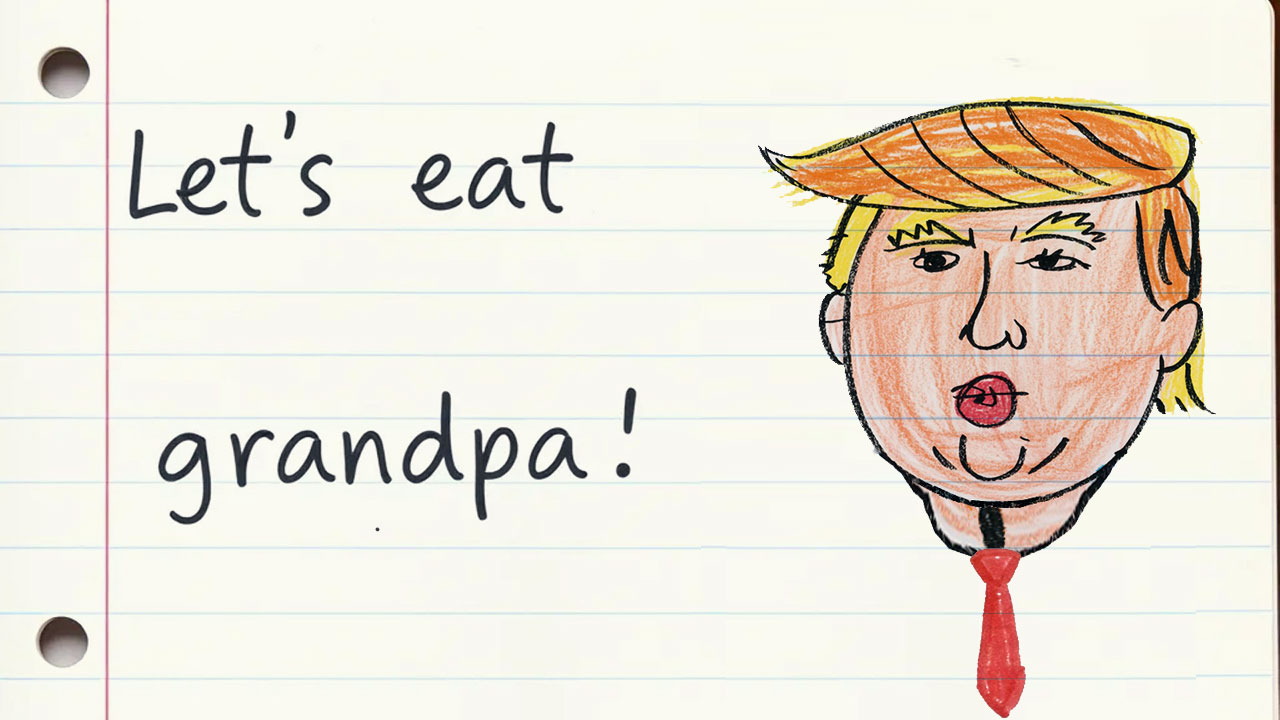
The truncated version — the one now circulating online — works even harder: “The President was offended by the ad and it’s not something I would have done.” It flatters Grandpa’s ego, reassures his base that America is Great Again, and signals to people in the know that Canada is being run by an adult — calming the markets. Meanwhile, Carney advances his real agenda: a federal budget designed to reduce U.S. dependence and expand Asia-Pacific trade.
For leaders, the takeaway is simple: communication is control. Words don’t just describe strategy; they are strategy. The right phrasing can buy time, redirect blame, and keep everyone believing you’re on their side. Carney didn’t merely apologize — he executed a controlled release of ambiguity.
Carney’s statement sounded off-the-cuff — but it was leadership in motion.