
Beyond the “Engagement Slump”
Why Alignment is the Only Leading Indicator That Matters in the 21st Century
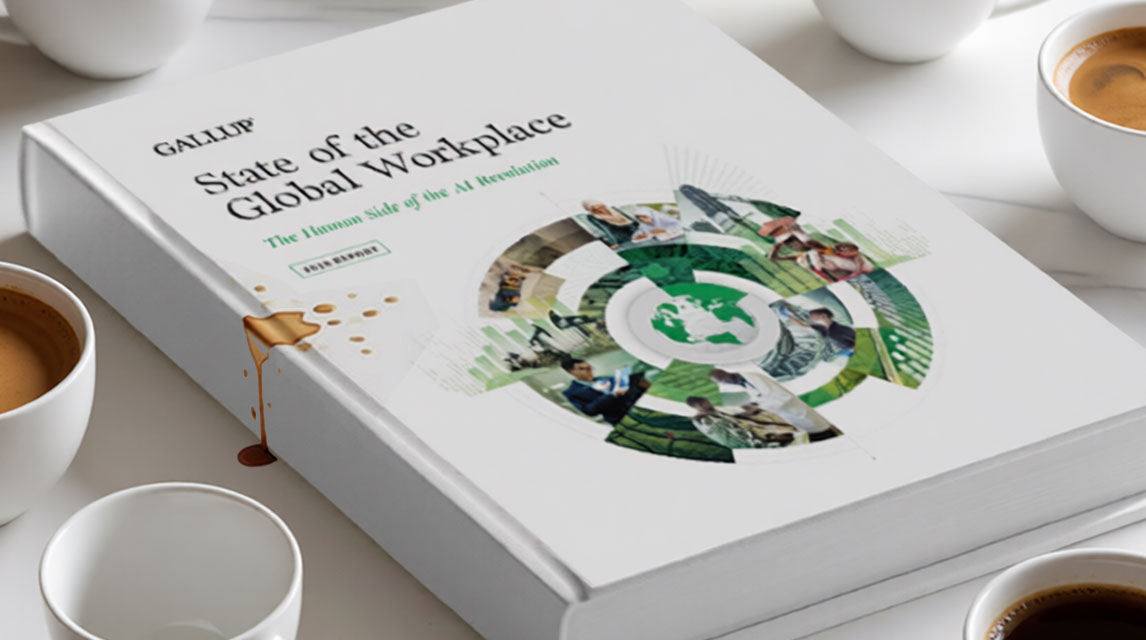
The 2026 Gallup State of the Global Workplace Report is out, and it offers more than just a list of grievances. It provides a roadmap for the “New Smart” leader.
The headlines are focused on the “engagement slump”—with 64% of employees “not engaged” and 56% “struggling.” But for the pragmatic executive, these figures are not the starting point for a new corporate initiative; they are a diagnostic signal.
Engagement is a lagging indicator. It is the “fever” that tells you the “infection”—a fundamental internal misalignment—has already taken hold. In the modern knowledge economy, the determining factor of productivity isn’t just individual traits or years of experience; it is the predictable potential of effective teamwork. To win in the 21st century and beyond, we must stop reacting to the fever and start measuring the alignment that prevents it.
The “New Smart”: Moving Beyond Digging Ditches
In the industrial age, productivity was a matter of physical output—if you needed a bigger ditch, you hired more people to dig faster. In the 21st-century knowledge economy, that logic is obsolete.
The “New Smart” recognizes that individual talent is merely the “ante” to get into the game. The actual determining factor of success is the predictable potential of effective teamwork, which hinges on the organization’s internal alignment. When a team is misaligned, they are, by definition, pulling in different directions. This creates internal friction where clashing priorities and “busy work” replace actual progress. In this environment, “working harder” is a strategy for burnout, not breakthrough. Working smarter means ensuring the team is rowing in unison toward a shared mission.
The Canadian Opportunity: Leaping Ahead of the 1:1.4 Gap
For Canadian business leaders, this shift in approach is a strategic necessity. Historically, Canada’s productivity “exchange rate” has mirrored the USD:CAD currency rate, hovering around 1:1.4.
Because the Canadian market has fewer of the massive international conglomerates that typically report higher engagement, we often appear to be starting from a disadvantage. But trying to “catch up” using 20th-century management styles is a losing game.
To leap ahead, Canadian firms need a new approach to business management. We cannot bridge a 40% productivity gap by asking people to “grind” more. That 20th-century mindset is dead. The only way to close the gap is to ensure that every team is a high-functioning “micro-culture” where mission and motivation are perfectly synced.
Reclaiming Leadership: The Manager’s True Role
The 2026 Gallup report identifies a critical management education gap, but the real “killer” is the state of the managers themselves. According to the data, managers are suffering from a crisis of disengagement that mirrors—and then amplifies—the struggles of their teams.
This isn’t a coincidence. Managers are not failing in a vacuum; they are simply the middle link in a chain of misalignment. They are, effectively, just another team reporting to a higher manager, caught in the same cycle of clashing priorities and “rowing in different directions.” Because they haven’t been trained to navigate these psychological dynamics, they have been conditioned to dismiss the “human element” as “HR stuff.”
This mindset is a strategic disaster. By limiting themselves to “pure operations” and surrendering people-leadership to an HR bureaucracy, managers have become supervisors of tasks rather than leaders of people. They treat team culture as a soft-skill peripheral rather than the very engine of productivity.
Real leadership is people-facing. When a manager waits for a “supreme sanction” from HR to address the alignment of their team, they have already abdicated their primary responsibility. Real leadership isn’t about managing timelines; it’s about reclaiming the “people part” and ensuring your tribe is rowing in unison.
The “Third Place” and the Ideal Tribe
The de-socialization of the workplace is a byproduct of the post-COVID landscape and deep AI penetration. We have optimized for digital efficiency but abandoned the “Third Place”—that “best good place” for connection that exists between home and the traditional, sterile office.
When the workplace ceases to prioritize connection, it ceases to function. Gallup’s data shows that “best-practice” organizations (those with 79% manager engagement) bridge this gap by creating “Internal Third Places.” These are micro-cultures where employees find their “ideal tribe.” This isn’t about office perks; it’s about finding a space where motivations and goals are aligned.
The Diagnostic: Moving from Observation to Action
If you wait for an annual survey to tell you your team is disengaged, you are performing an autopsy, not a diagnosis. You need a leading indicator that tells you if your team is aligned today.
The Q7 Collectiver Culture Compass was built to solve this exact problem. Developed in Canada for the global market, TruvTus – the online Q7 version – allows managers to reclaim their leadership by providing an instant, team-level health check. It bypasses the “HR silo” and identifies clashing priorities before they drive productivity into the ground.
It is a proactive way to determine if you are building an “ideal tribe” or simply managing a group of people pulling in different directions.
A Path Forward
The 2026 data is clear: the status quo is failing. The “fever” of disengagement is high, but the cure is within reach.
TruvTus invites you to experience the difference that alignment makes. Visit TruvTus to explore your own motivational drivers and use the Chektus feature to run an instant “health check” for your team. It is available free for a limited time—a simple, pragmatic step toward reclaiming your leadership and leaping ahead of the curve.